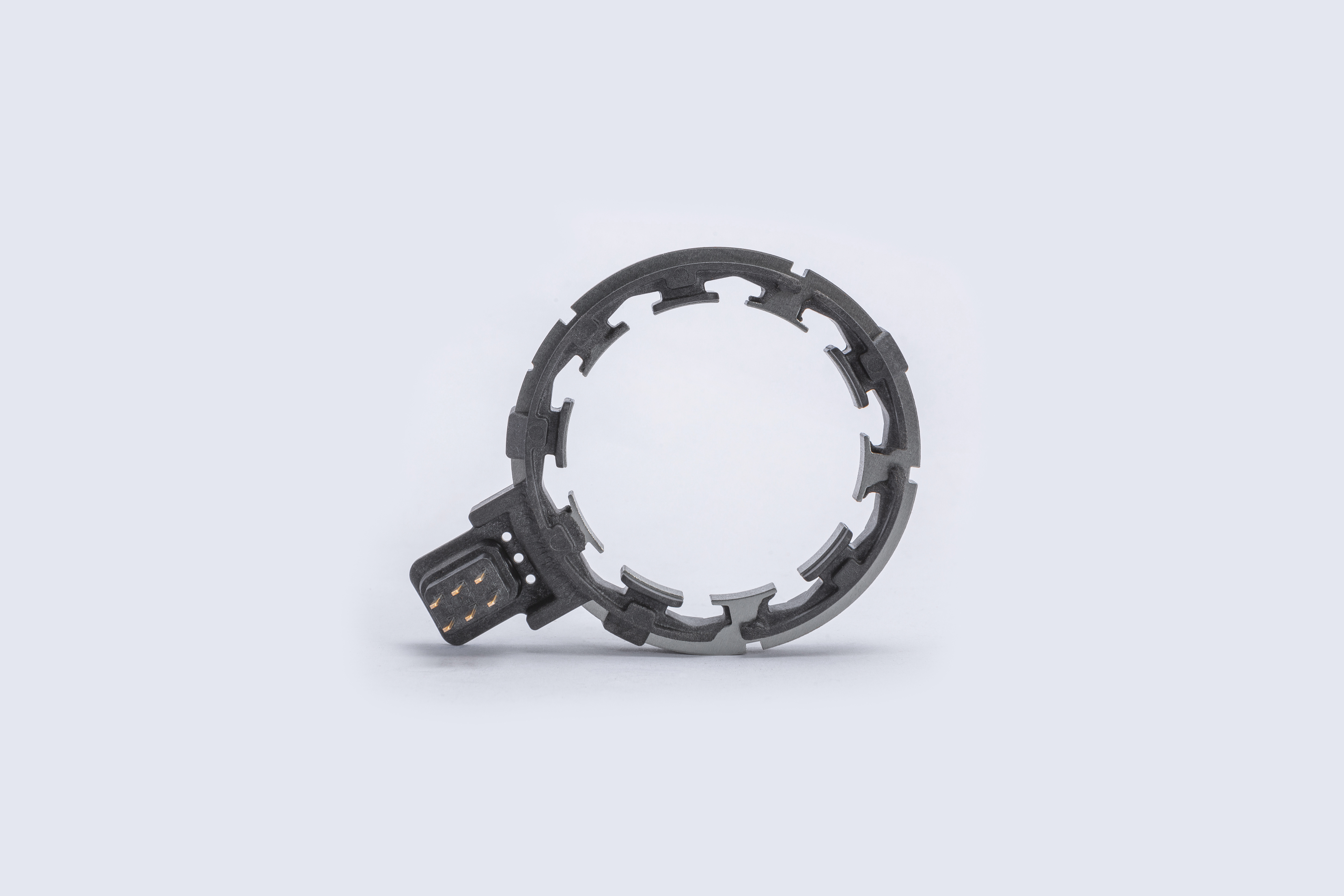
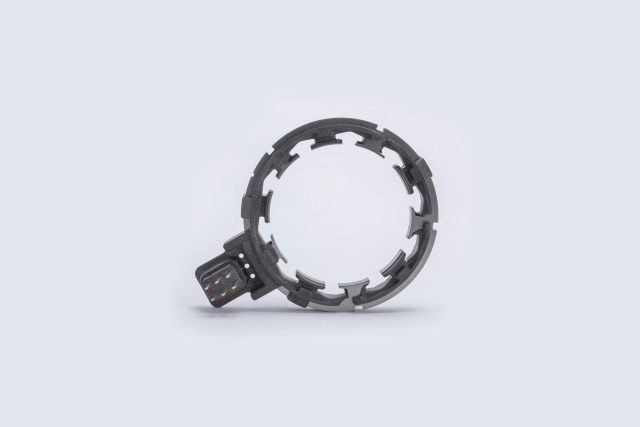
| Product Model | 52170000166 | Picture |
|---|---|---|
| Production Process | Precision turning,magnetization, inspection | 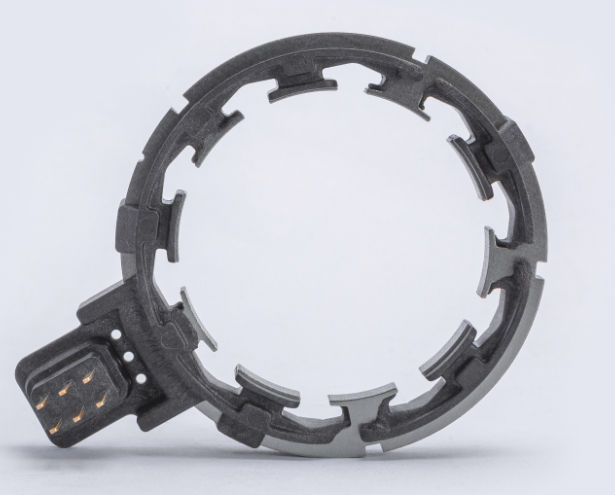 |
| Product Specifications | Ф15.0*6.0 | |
| Product Material | Permanent magnetic material neodymium iron boron | |
| Application areas | For small motor position detection on laptops | |
| Notes | No special notes |
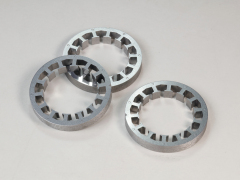
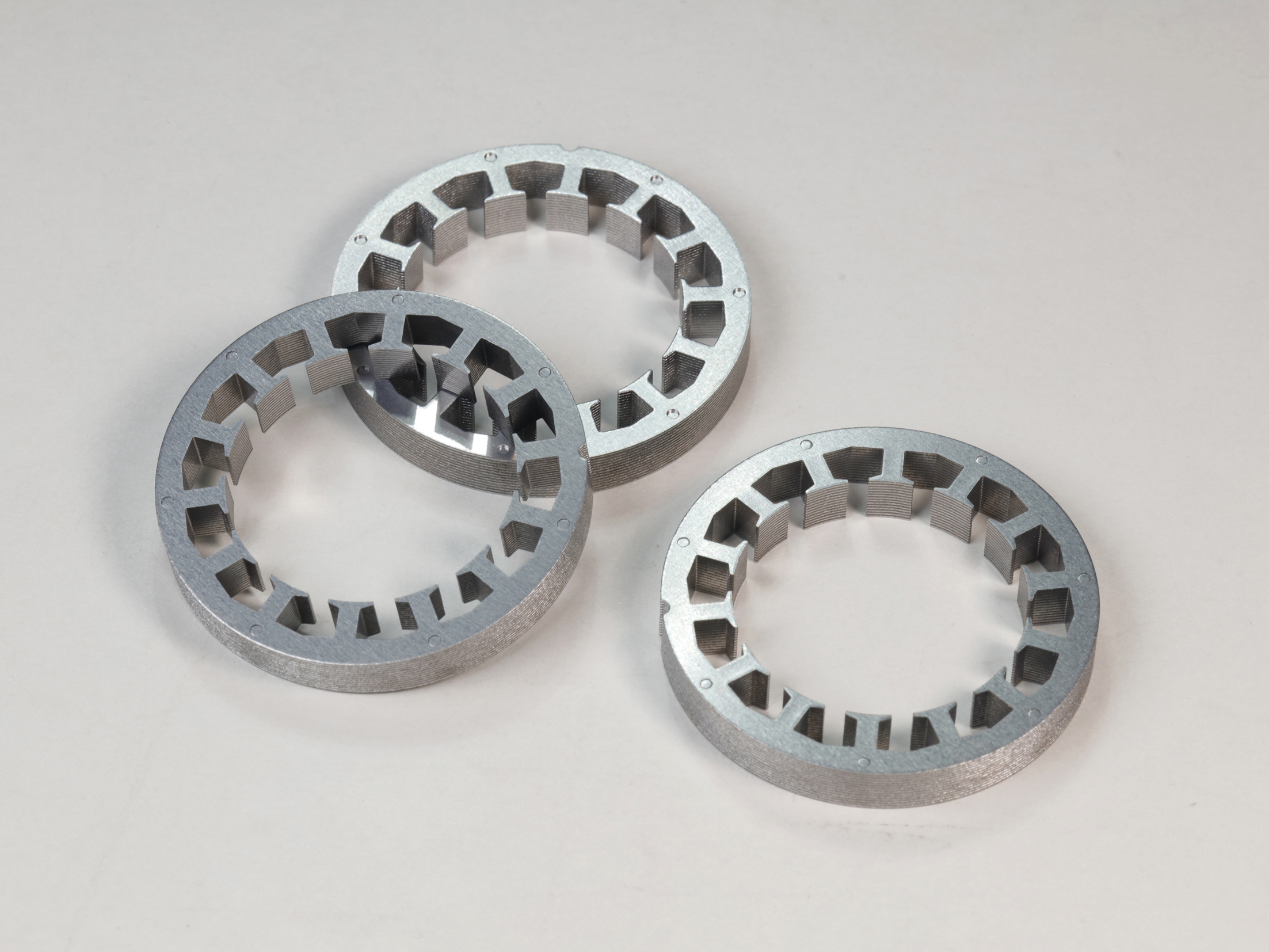
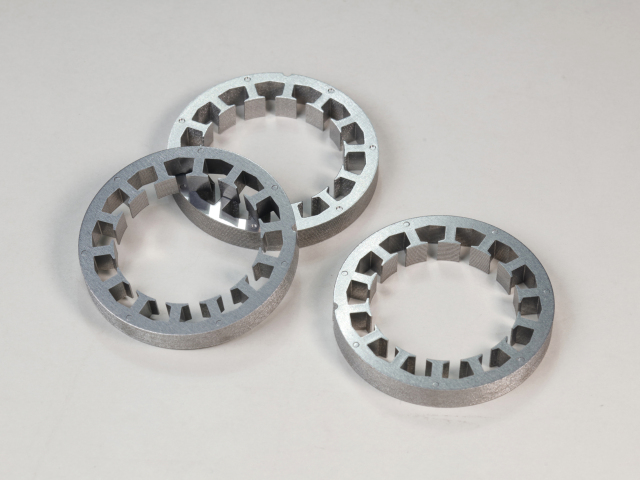
Electrical steel is specified for the duty the motor will see. The grade and the lamination thickness are agreed with your engineers early, because those two decisions set the magnetic behavior of the finished core long before the first stack is built. From there the profile is stamped in a single progression and the laminations are stacked in sequence, with the layered edges visible around the outside of the core showing how the stack is built up.
Because we are metal stamping manufacturers rather than a trading house, the die, the stamping and the stacking stay in one plant. Burr condition, flatness and stack alignment therefore sit under the same roof as the tooling, which matters when a core has to drop cleanly into a housing and accept windings without rework.
| Property | Detail |
|---|---|
| Core type | Laminated stator core |
| Material | High-grade electrical steel, grade selected for the motor's duty |
| Lamination process | Precision stamping in a single progression |
| Core form | Stacked ring with inward-facing teeth |
| Winding interface | Slot profile set to your winding layout |
| Structure design | Built to your motor drawing |
| Custom options | Lamination profile, slot and tooth geometry, stack height, mounting features |
| Drawing inputs | Motor envelope, winding layout and housing interface |
| Tooling | Die, stamping and stacking held in one plant |
| Inspection | Dimensional and visual checks completed before the core is released |
| Documentation | Drawing revision, material grade and batch details recorded for traceability |
Woosung is a precision component manufacturer serving OEMs and system integrators across automotive, electric motor, industrial equipment, and electronics programs. Our range covers aluminum plate assemblies, stator and rotor laminations, iron cores, copper shells, brass contacts, and custom-shaped brackets and clips, produced through metal stamping, injection molding, and stamping-and-stacking. Custom tooling, material selection, surface treatment, and structure design follow your drawings and specifications, and our global facilities support scalable batch production with unified quality standards and dependable turnaround.
Structural features are designed into the lamination profile rather than added later, so mounting holes, keyways, notches and tooth details are all cut at the precision stamping stage. That keeps the stack flat and the laminations aligned. If a feature changes after the die is made, we would rather revise the tooling with you than modify finished cores.
Yes. Stator and rotor cores for the same motor can be produced from one lamination program, which keeps the two cores dimensionally matched and the air gap consistent. The cores are matched to the motor design rather than the other way round, so it helps to bring both parts of the drawing into the same conversation.
Each profile runs on its own die, and that die stays with the program. Because every core is produced through custom metal stamping services to your drawing, the lamination geometry is fixed at tooling stage instead of being adjusted on the line, and the stack is checked before it is packed and again against the approved sample.
The stamped profile is checked while it runs, and finished stacks are measured on the same inspection equipment used across our workshops, including vision measuring machines and coordinate measuring machines. As precision metal stamping manufacturers we work to your drawing rather than a general specification, so the dimensions that matter to your assembly are the ones recorded before the core is released for packing.
Yes - drawings and samples are the starting point for every stator core we quote. We review the critical dimensions with your engineering team, confirm them at sample approval, and run production to that approved standard. If a call-out looks unusually tight for the application or the material, we raise it during that review rather than after the batch is made.
Cores ship as stamped, stacked laminations. If your program needs winding, overmolding or further assembly, raise it at the drawing stage so the tooling and the process route are planned for it from the start - as automotive stamping suppliers we run stamping, injection molding and assembly under one roof, and composite builds can be arranged on that basis.