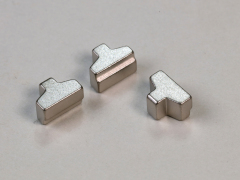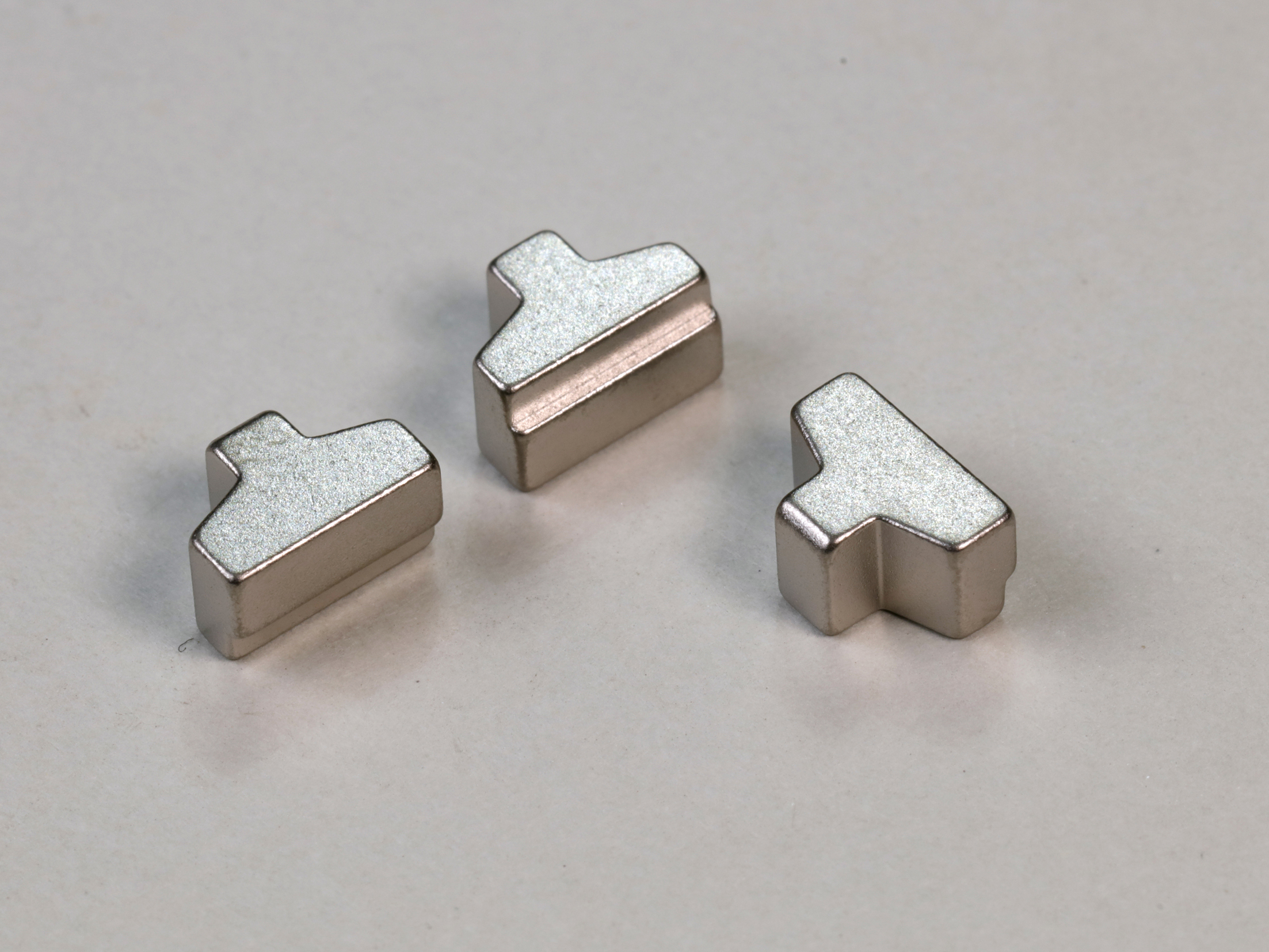
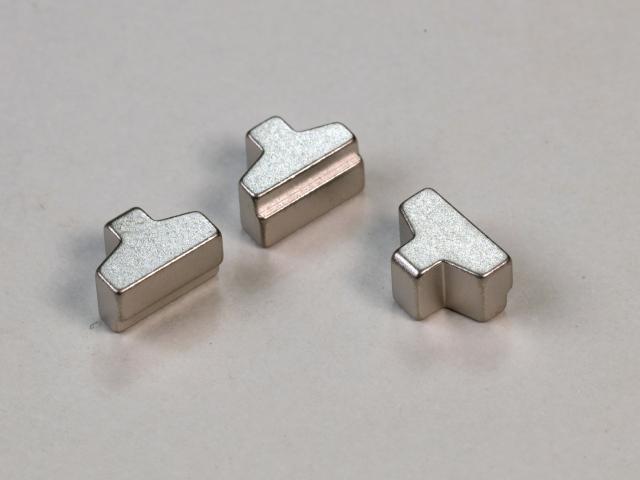
Not every magnetic circuit has room for a standard lamination. This custom-shaped iron core is formed to the geometry your assembly actually needs — a compact sensor core, a core for a small motor, or a flux guide that has to sit inside a tight housing. We produce it by custom metal stamping from high-grade magnetic material, so the profile and the seating face follow your drawing rather than a catalogue shape.
Design teams reach for this core when an off-the-shelf lamination would force extra brackets, cut-downs or a rework of the surrounding part. It arrives as a finished stamped piece, ready for winding, bonding or insertion into the housing, and the same tooling carries through from validation builds into production batches.
| Core material | High-grade magnetic material |
| Material range | Iron, copper, stainless steel and aluminium stock |
| Forming process | Precision metal stamping |
| Geometry | Custom shape, formed to your drawing |
| Tolerance | Tight tolerance control carried across the batch |
| Magnetic performance | Optimised for stable flux and low iron loss |
| Customisation | Tailored to your drawing or sample |
| Edge and burr condition | Held to the drawing and ready for winding or bonding |
| Surface treatment | Spraying, plating, polishing and galvanising available on request |
| Inspection options | X-ray, hardness, roughness and temperature-chamber checks available |
| Packaging | Anti-static and moisture-proof as standard, with dust-free and custom pack options |
| Production | Batch supply with repeatable forming |
Shape comes first with this part. Send a drawing, a 3D model or a physical sample and we review the profile, the seating face and the space it has to fit into; if a feature would be awkward to form, we suggest a small change to the profile rather than cut an expensive tool around it.
Typical cores are compact blocks with a stepped or T-shaped body and a flat base — a form that sits cleanly against a housing or circuit board and leaves room for the winding while keeping the magnetic path short. Simpler profiles are used when the core only has to guide flux between two points.
Custom metal stamping does the forming, and the grade is matched to the job: a small sensor core is usually driven by sensitivity and footprint, while a flux guide or a micro-motor core is driven by iron loss and saturation behaviour. Confirm the exact grade and finished dimensions against your own assembly before the tool is cut.
Woosung is a precision component manufacturer serving OEMs and system integrators across automotive, electric motor, industrial equipment, and electronics programs. Our range covers aluminum plate assemblies, stator and rotor laminations, iron cores, copper shells, brass contacts, and custom-shaped brackets and clips, produced through metal stamping, injection molding, and stamping-and-stacking. Custom tooling, material selection, surface treatment, and structure design follow your drawings and specifications, and our global facilities support scalable batch production with unified quality standards and dependable turnaround.
Both are made by custom metal stamping; the difference is the starting point. A standard lamination is designed around a catalogue shape, so your assembly has to work around it. A custom-shaped core is designed around your assembly — the footprint, the seating face and the room left for the winding all come from your drawing. That usually removes brackets, cut-downs or a redesign of the surrounding part.
We form them from high-grade magnetic material chosen for stable permeability and low iron loss. The exact grade is agreed against your application: a small sensor core is usually driven by sensitivity and available space, while a flux guide or micro-motor core is driven by loss behaviour. Send the working conditions with your drawing and we will match the grade to them.
Compact cores for wearables, small appliances and miniature sensor packages are routine work for a metal stamping manufacturer, and low iron loss matters most at that scale. The practical limit depends on your profile — feature spacing, material thickness and the way the core seats. Send the drawing or a sample and we will confirm what the tool can hold.
Yes. Send the sample and we will measure it, agree the critical dimensions and rebuild the profile around them. Where the original shape is difficult to form, we will suggest a small change and explain what it does to fit and magnetic behaviour. A drawing or 3D model is welcome, but it is not the only way to start.
Consistency comes down to holding one approved material grade, running one tool, and checking the profile while the tool is still set up rather than only at the end of the run. Material from a different batch or a loose profile will shift permeability and iron loss, so both are controlled, and repeat orders are built to the same drawing revision as the first.
Yes. Cores leave us as finished stamped pieces, so they can go straight into winding, bonding or insertion into a housing rather than needing bench work first. If your process calls for a particular edge condition or surface treatment, note it with the drawing — finishing steps are part of the metal stamping services we quote for the part.